Interdisciplinary Academic Panel: Youth, Memory and Peacebuilding in Bosnia and Herzegovina – The Legacy of 1992–1995
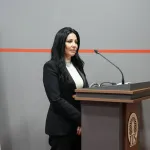
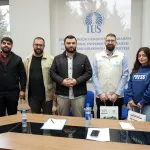
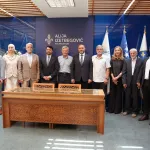
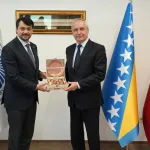
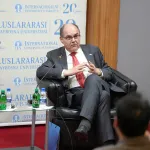
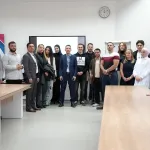
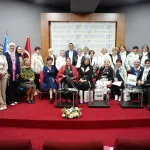
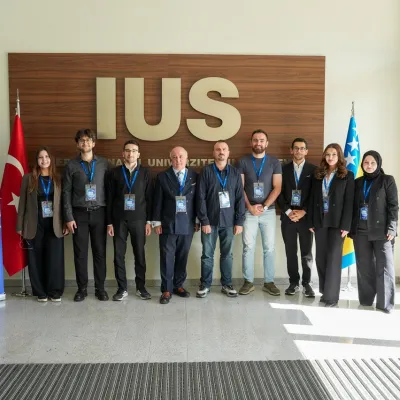
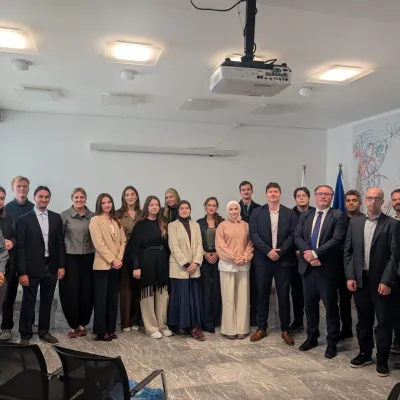
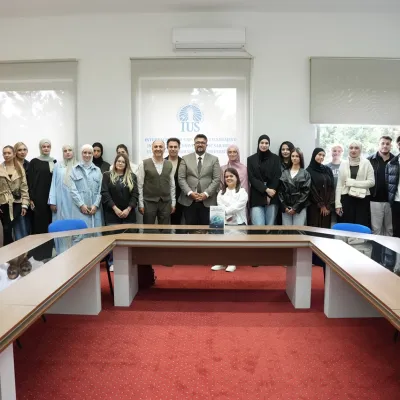
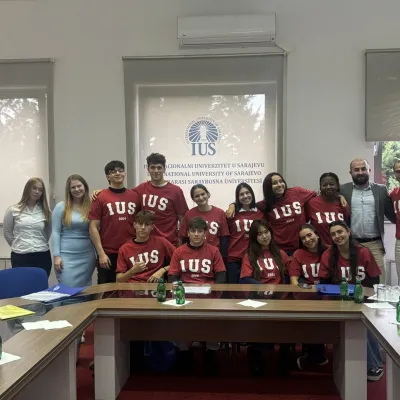
As part of the “In the Legacy of 1992–1995” project, the Mostar Youth Associations Federation, in partnership with the Bosna Türk Mezunlar Derneği (TÜMED) and Mostar Jugend Belgium, brought together university students and young participants from Türkiye and Belgium for a program focusing on youth, memory, and peacebuilding in Bosnia and Herzegovina. The International University of Sarajevo (IUS), through its Balkan Studies Center (BSC), hosted the participants and collaborated with the organizing partners in developing and delivering the academic program.
Program provided a platform for participants to engage with the historical, social, legal, and contemporary dimensions of the 1992–1995 war in Bosnia and Herzegovina. Through academic presentations and direct discussions with the speakers, the program aimed to connect historical understanding with questions of memory, reconciliation, and the role of younger generations in peacebuilding.
The first academic sessions opened with a presentation by Dr. Adnan Mestan, Director of the Balkan Studies Center (BSC), who examined the historical developments leading to the 1992–1995 period. His presentation traced the evolution of nationalism and nation-state building in the Balkans from the nineteenth century through the establishment of Yugoslavia, highlighting how these historical processes contributed to political and social tensions in the region.
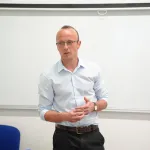
The second presentation was delivered by Asst. Prof. Dr. Mustafa Krupalija, who examined the period from the establishment of Yugoslavia to the outbreak of the war in 1992 from a sociological perspective. His analysis focused particularly on the social and ethnic divisions that emerged and deepened within Bosnia and Herzegovina. He also discussed the transformation of relations among the country’s different communities and the broader political and social processes that contributed to the gradual erosion of social cohesion. His presentation highlighted how these developments shaped the conditions in which the conflict of 1992–1995 unfolded.
The second session continued with a presentation by Senior Assistant Muhammed Huzeyfe Küçükaytekin, who addressed the 1992–1995 war from a legal perspective. He emphasized the importance of recognizing the genocide committed during the war and discussed the significance of approaching and describing the events through an appropriate legal framework. He further drew attention to the continuing challenge of genocide denial and to the fact that some individuals and groups continue to express pride in, or glorify, acts associated with the atrocities committed during the war. He underlined that the persistence of such attitudes represents not only a challenge for Bosnia and Herzegovina, but also a broader problem for humanity, particularly in terms of historical memory, justice, and the prevention of future atrocities.
The final presentation was delivered by Mr. Kayhan Gül, Editor-in-Chief of Balkan News, who examined the conflict and its legacy through the perspective of contemporary media and news coverage. Drawing on current examples, he discussed the role of media narratives in understanding the divisions created during the war, as well as Serbia’s approach to the Bosnian conflict between 1992 and 1995 and its contemporary implications. He also highlighted how contemporary media coverage can shape public perceptions of the past and influence the ways in which younger generations understand the legacy of the conflict.
The academic sessions concluded with an interactive question-and-answer session, allowing the participating students to engage directly with the speakers and discuss different perspectives on Bosnia and Herzegovina’s recent history and its continuing relevance for younger generations.
The program highlighted the importance of bringing young people into conversations about historical memory and peacebuilding. By welcoming participants from Türkiye and Belgium to IUS and creating a space for dialogue with academics and media professionals, the collaboration provided an opportunity to reflect on the legacy of the 1992–1995 period and the role of youth in building a culture of peace.